

In our journey to understand the deeper ties between faith and experience, it becomes clear that religious division often stands in stark contrast to the spiritual ground we all share. At the heart of this exploration, the work by the UEF Foundation reminds us that religion is fundamentally about oneness—even as we witness schisms and splits within traditions.
The Paradox of Religion and Spirituality
Religion, in many peoples’ lives, offers structure: rituals, doctrines, communities, symbols. Spirituality, meanwhile, is often more fluid: a yearning for connection, meaning, transcendence. Yet the boundary between the two is not fixed. True spirituality can live within religion, and religious life can express profound spiritual insight. The UEF Foundation article “Sectarian Splits: The Irony of Division in Religion” presents this paradox vividly: religion aims at unity but is often marred by religious division.
The Reality of Religious Division
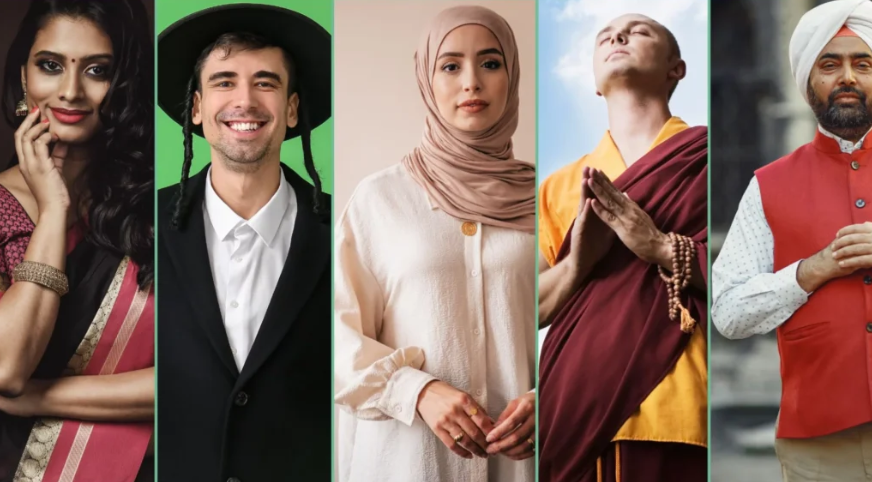
To grasp the common ground between religion and spirituality, one must first recognise the reality of religious division. As the UEF article explains, across Judaism, Christianity, Islam, Hinduism and Buddhism we see fracturing:
In Judaism: into Orthodox, Conservative, Reform, Reconstructionist.
In Christianity: Catholic, Protestant, Eastern Orthodox—plus thousands of sub-denominations.
In Islam: Sunni, Shia, and the mystical Sufi branch.
In Hinduism: major streams like Vaishnavism, Shaivism, Shaktism, despite the underlying idea of oneness.
These splits show how organisational or doctrinal fault-lines can surface even in systems built on a recognition of unity.
Why Spirituality Points to Common Ground
Despite these divisions, spirituality asks a different question: Who am I beneath the labels? What is the source of meaning, connection, awe? The UEF article highlights that prophets and religious founders often emphasised our similarities rather than our differences.
For example:
“We should remember that our similarities outweigh our differences, especially when the differences are merely variations on the same religious teaching.”
In this sense spirituality becomes a bridge—not just between persons and divine, but between traditions themselves.
Where Religion and Spirituality Meet
If spirituality is the longing for connection, meaning, transcendence, religion can provide the path. The meeting of the two happens when:
Ritual becomes more than routine: it becomes a gateway to awareness.
Doctrine becomes more than belief: it becomes lived wisdom.
Community beyond identity: it becomes fellowship in shared purpose.
The UEF article underscores that religious systems may fracture, but the spiritual impulse beneath them remains universal. The divisions show up in institutions, not necessarily in the human heart’s yearning.
Navigating the Tension: Division and Unity
Recognising religious division is not an act of cynicism but realism. By naming it, the UEF Foundation opens space to ask: How can we move toward unity without erasing difference?
A key insight they share: many conflicts labelled ‘religious’ are in fact about power, territory, identity—not only theology.
Therefore, the spiritual work required is two-fold:
Inner: cultivating awareness of our shared roots and transcendent longing.
Outer: recognising that institutional and cultural differences need not become barriers to human solidarity.
The Practical Value of the Common Ground
Orienting toward common spiritual ground within religion has real-world benefits:
It softens inter-faith hostility: when people see that different faiths share deep longings, suspicion gives way to curiosity.
It supports personal growth: viewing one’s religious practice as a spiritual journey helps shift from rigidity to openness.
It fosters inclusive communities: when the spiritual quest is foregrounded, communities can embrace diversity in practice without fear.
A Call to Unity in Diversity
The UEF article concludes with a powerful reminder:
“Sectarian splits or sectarian fanaticism within religions highlight the irony of division within a framework meant to promote unity.”
In that irony lies an invitation. The spiritual ground beneath religions invites us to a different posture: one of respect, curiosity, humility. It invites us to say: “Yes, we are different. Yes, we may follow different paths. But we all walk toward the same light.”
And in doing so we move beyond mere coexistence toward flourishing together.
Concluding Thoughts
In sum, the common ground between religion and spirituality lies in the recognition that beneath the many religious divisions there is a unity of human aspiration. Religion gives language and structure; spirituality points us beyond the structure to the source. By honouring both — the faith we practice and the longing we feel — we open ourselves to a richer possibility: shared humanity, shared meaning, shared journey.
The UEF Foundation’s reflections help us see that while religious division is real, it need not define our spiritual horizon. Rather, it can sharpen our awareness of the latent unity that binds us. May we walk that ground together with neither erasure of difference nor surrender to fracture—but with the open heart of the spiritual seeker, and the inclusive mind of the human family.


Write a comment ...